From Open Fire to Innovation: How Mariam and Her Community Reinvented Cooking in Kogi State
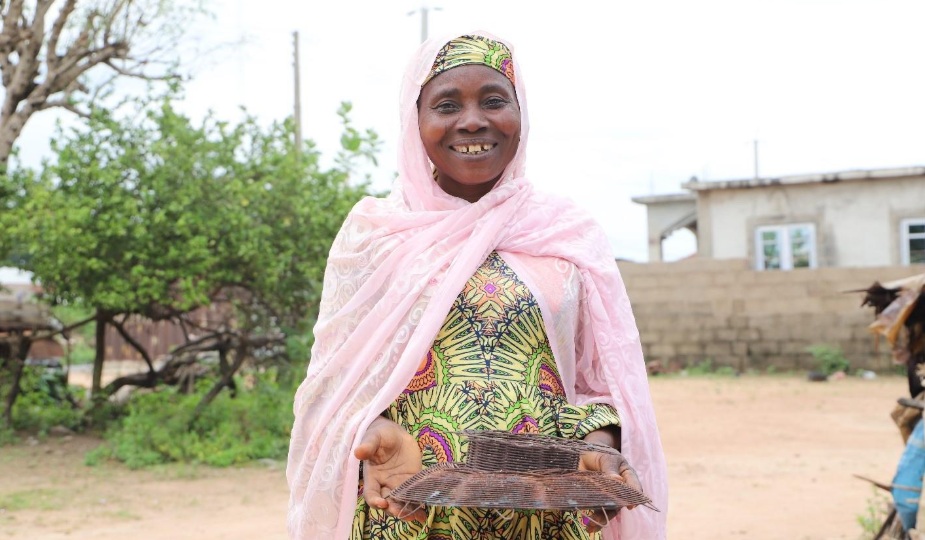
In a small corner of Kogi State, Mariam Mohammed reflects with gratitude and pride on how her community’s cooking culture is changing. For generations, women relied almost exclusively on firewood, enduring smoke-filled kitchens, blackened pots, and the exhausting daily chore of fetching wood. But through the Green Livelihoods Alliance (GLA2) Project, implemented by the Women Environmental Programme (WEP) in partnership with the Chachavivi Women and Girl Child Development Foundation, Mariam and other women were introduced to the concept of the charcoal stove, a simple innovation that is transforming lives.
“When we first learned about the charcoal stove, we saw how it could help us save money and energy,” Mariam explained. “It uses less charcoal, cooks faster, and doesn’t blacken our pots like firewood does. That’s why many of us preferred it over open fire.”
However, the introduced charcoal stoves came with a challenge, the price. At ₦10,000, the stove was simply too expensive for many households in her community. But rather than let that barrier stop them, Mariam and her neighbors took matters into their own hands.
“We improvised our own stove using tins,” she said with a smile. “Even though it’s not exactly the same as the one they showed us, it still works and serves the purpose. What matters is that the knowledge they shared with us gave us the confidence to create our own solutions.”
For Mariam, the real gift was not just the technology itself, but the knowledge and empowerment that came with it. She emphasized that women in her community now have a deeper understanding of the benefits of alternative cooking methods. “It’s not about giving us material things,” she said. “It’s about teaching us. Because of the awareness we gained, more people are now using charcoal instead of firewood.”
The shift has had a ripple effect: healthier kitchens, reduced deforestation, and a stronger sense of agency among the women. Mariam is hopeful that more innovations will come their way. “If there are new ideas, we are ready to learn. Knowledge is what stays with us. It helps us take care of ourselves, our families, and our environment.”
Mariam’s story is one of resilience, creativity, and the power of knowledge transfer. What started as a lesson on cleaner cooking has sparked a movement of women-driven innovation, proof that when communities are empowered with information, they can adapt, improvise, and thrive