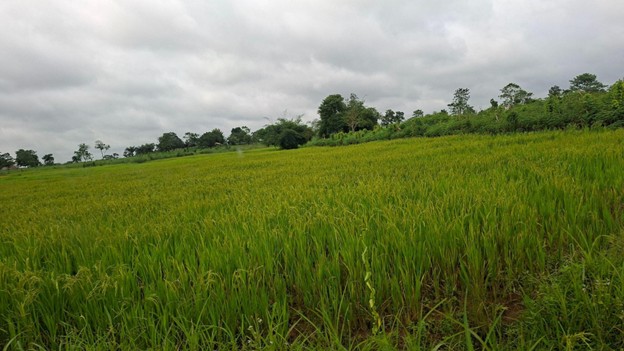
Food Security Restored Through GLA2 Project on Reforestation
Ebonyi State, long known as the “food basket of the Southeast,” had been watching its bounty fade. Rampant deforestation and soil degradation stripped the land bare, triggering erosion and causing harvests to plummet. In several communities, state agricultural records show crop yields dropped by nearly 40% before intervention efforts began.
One of those farmers, Mrs. Ngosi Okereke, farmer of Ndiode, remembers the struggle well. “I used to harvest less than one bag of cassava from this land,” she says, her hands still rough from hoeing. The earth, once rich with organic matter, had turned thin and drought-prone; the rains washed away what little topsoil remained.
Enter the GLA2 Project, implemented by NEW Foundation in partnership with local environmental groups. Over the past year, more than 5,000 trees have been planted in erosion-prone zones, alongside training in agroforestry practices. These efforts are helping to rebuild soil fertility, reduce runoff, and restore land health.
“This year, I harvested three bags of cassava. The soil is coming alive again,” Mrs. Okere shares, walking through young tree saplings shading her cassava plot.
Across Ebonyi, similar stories are emerging: healthier farms, fuller plates, and growing hope. Families once beset by food shortages are now able to produce enough for home consumption and sell surplus in local markets.
Supporting data underline these transformations with broader national trends. For example:
- A study published in the Journal of Biology, Agriculture and Healthcare found that in Nigeria, a 1% increase in deforestation correlates with approximately a 1.7% decrease in agricultural productivity over the long term. IISTE
- Forest cover metrics also show alarming loss: Nigeria had about 20.4 million hectares (≈ 22%) of natural forest in 2020; recent years show continued decline, with deforestation contributing to carbon emissions and loss of ecological resilience. Global Forest Watch
- According to the Global Forest Resources Assessment 2020 (FAO), less than 8% of Nigeria’s land area is currently covered by forest reserves and natural forest, including gazetted reserves and parks. Open Knowledge FAO
According to Dr. Joshua Ameachi, the Department of Climate Change, Ebonyi State, reported that communities participating in the reforestation effort have achieved a tree survival rate of ~80%, a marked improvement over previous efforts that often failed due to neglect. This success is being attributed to local involvement, frequent monitoring, and integrating agroforestry into farming routines and as well the Green Livelihood Alliance Project.
What once looked like irreversible decline is now shifting toward recovery. From farmers like Mrs. Okereke to children helping plant seedlings in the afternoon shade, communities and Ebonyi story is becoming one of resilience. With sustained effort and community ownership, reforestation is restoring both soil and hope and possibly offering a model for other states caught in similar cycles of land degradation.