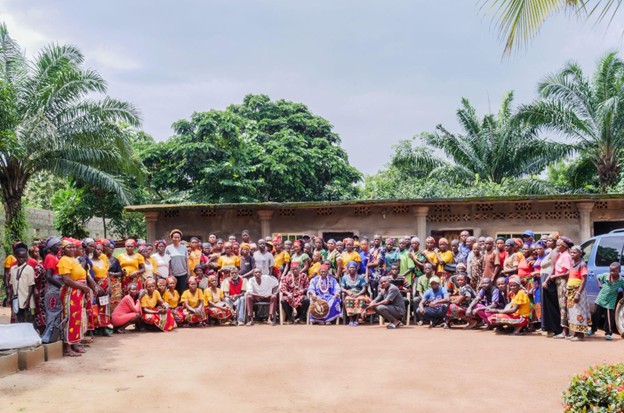
Turning the Tide: How GLA2 Is Helping Ebonyi Communities Weather Floods
When heavy rains pounded Ebonyi in August, rice fields in Abakaliki and Izzi disappeared under water, while in Afikpo North, more than 800 farmlands were washed away, displacing over 3,000 households. The floods didn’t just destroy crops, they wiped out months of labor, family savings, and food that entire communities were counting on.
It left most of the farmers in that area devastated, a farmer, Isaac Ibe shared “We watched our fields sink. For some of us, it meant hunger and debts. For others, it meant leaving the village to find work to survive.”
A Growing Vulnerability
Flooding in Ebonyi is not new, but its intensity has worsened with deforestation and poor land management. Without trees to hold back the soil, water runs unchecked, carrying away fertile land and leaving farmers with barren, unproductive plots.
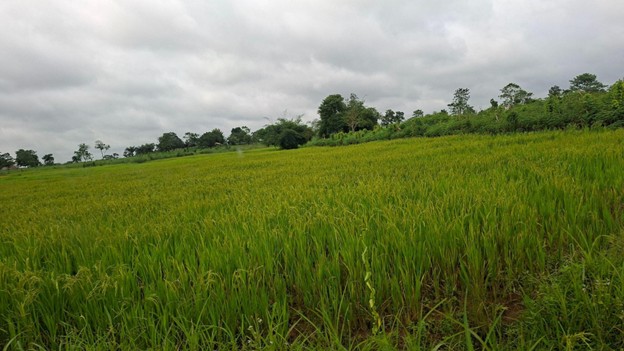
The recent flood data tells a stark story:
- Abakaliki and Izzi recorded over 4,300 farmlands destroyed combined.
- Afikpo North had the highest displacement, with over 3,000 households affected.
- Across LGAs like Ohaukwu and Ezza South, hundreds more households were uprooted.
At the same time, Ebonyi’s food security is under threat. With rice and cassava yields already declining, every flood pushes families closer to hunger.
Where GLA2 Steps In
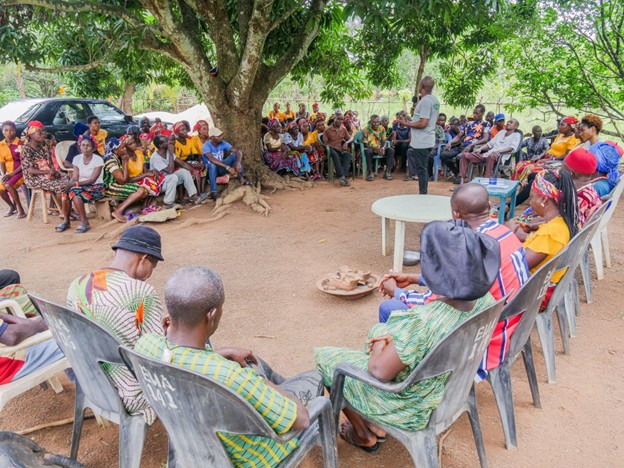
This is the reality of both communities Ohatekwe-Edda in Abakaliki Local Government Area and at Okposi community in Ohaozara Local Government which brought the Green Livelihoods Alliance (GLA2 Project), implemented by the NEW Foundation with support from the Women Environmental Programme (WEP), to work towards changing the trajectory. The project focuses on reforestation, community awareness, and sustainable land practices.
From the same flood-hit LGAs came a quiet story of resilience:
- In Okposi over 2,200 trees were planted in erosion-prone areas.
- In Edda, the project helped restore land with 1800 new trees and trained farmers in agroforestry.
- Tree survival rates remain strong 80% and above in the communities ensuring long-term impact.
“I planted trees along my cassava farm after the training,” says Mrs. Okereke of Okposi. “This year, even with heavy rain, my harvest tripled. It saved my family.”
The Power of Bye-Laws
GLA2 has also encouraged community by-laws local rules against indiscriminate tree felling. Chiefs and traditional leaders in the communities now fine offenders or require them to plant new trees. These laws are more than penalties; they are commitments to survival.
As Mr. Solomon Iruka explains: “We now see floods destroy neighboring lands. But here, because of our bye-laws and replanting, the damage is smaller. We must extend these rules to neighbouring communities to help the deal with their struggle now.”
Why It Matters
Ebonyi’s challenges mirror Nigeria’s broader crisis. With the country losing 400,000 hectares of forest annually, the risks of flooding, erosion, and hunger are multiplying. But GLA2 offers proof that local action can scale into big solutions: tree planting, community bye-laws, and alternative livelihoods are directly reducing vulnerabilities.
The Road Ahead
The chart comparing flood-affected farmlands to trees planted in Ebonyi underscores a simple truth: while the floods are massive, the response is growing. Scaling GLA2’s model across more LGAs can:
- Protect farmlands and reduce household displacement.
- Increase crop yields and stabilize incomes.
- Build resilience against climate disasters.
For Ebonyi’s farmers, reforestation is not charity, it is survival. Every tree planted is a shield against the next flood, a safeguard for tomorrow’s harvest, and a promise of dignity.
As the rains continue to test the state, the message is clear: expanding GLA2’s interventions and enforcing bye-laws are not just environmental policies, they are life-saving actions.