HIGHLIGHTS OF OUR PARTICIPATION AT COP30
From 11-22 November 2025, Women Environmental Programme (WEP) participated at the 30th session of the Conference of Parties to the United Nations Framework Convention on Climate Change that took place in Belem, Brazil.
At the conference, WEP advocated for stronger, gender-responsive climate action and supported calls for the adoption of the extended Lima Work Programme on Gender and the new Gender Action Plan.
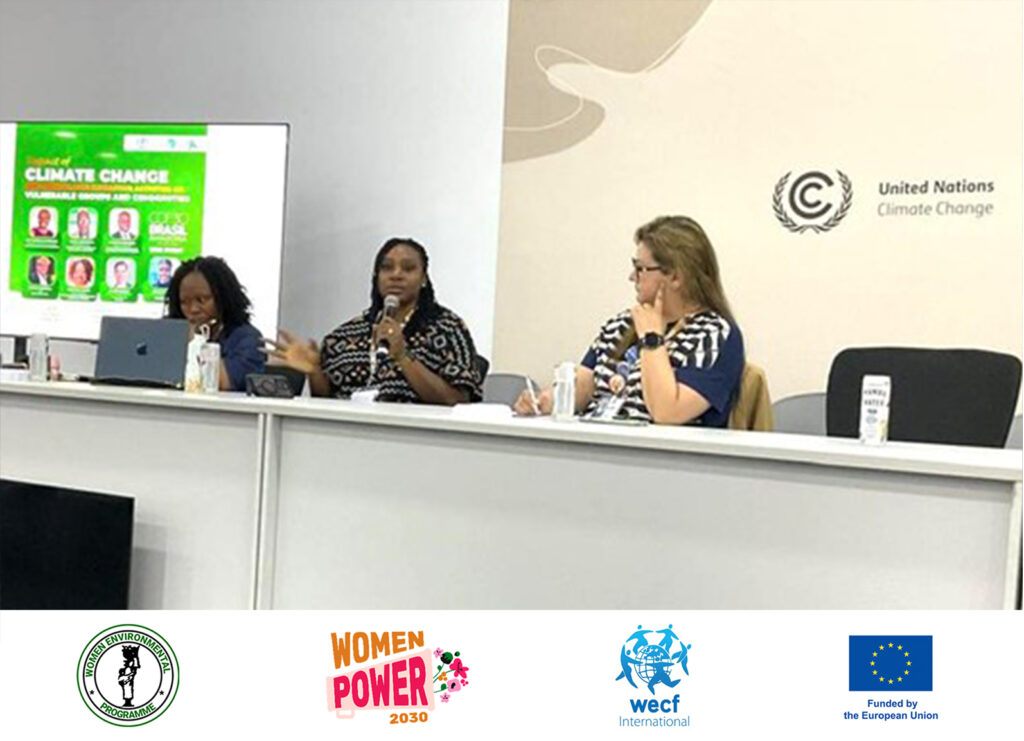
During the conference, WEP shared her works at several events including the side event on The Impacts of Climate Change on Unregulated Extractive Activities on Vulnerable Groups and Communities. WEP also spoke at other events organized by the World Meteorological Organization, Economic Community of West African States (ECOWAS) and the Nigerian Government.
Two staff from our organization joined other partners and feminist climate justice activists at the conference to amplify the voices of community women and other marginalized groups we work with, and for.
Below are the highlights of the key events we participated in.
In partnership with the African Centre for Environment, Agriculture & Rural Development (ACEARD); and Environmental Protection and Development Association (EPDA), we organized a side event titled: “Impacts of Climate Change and Unregulated Extractive Activities on Vulnerable Groups and Communities”
Held on the 13th of November 2025, the side event examined how unregulated extractive activities across Africa are impoverishing communities, widening gender inequalities and causing the emission of greenhouse gases.
The event recommended actionable pathways to empower communities, protect food systems, and build resilience.
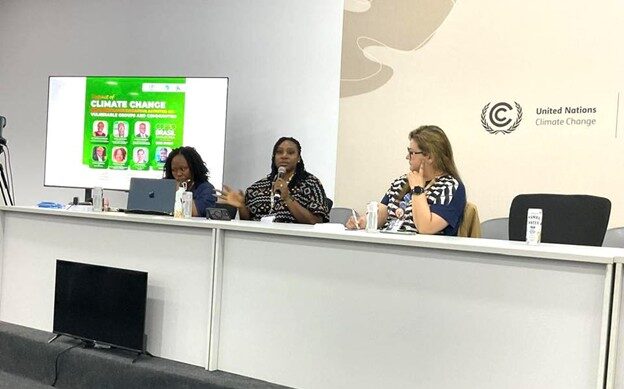
On the 17th November 2025, the World Meteorological Organization (WMO), in collaboration with Save the Children, COPE Academy and Women Environmental Programme (WEP), hosted a side event in the Blue Zone, Belem, Brazil, at #COP30.
The side event titled: Empowering Women, Children and Indigenous Peoples through Inclusive Early Warning Systems and Climate Services, provided a platform for the partners to share different initiatives they were undertaking to avert climate risks.
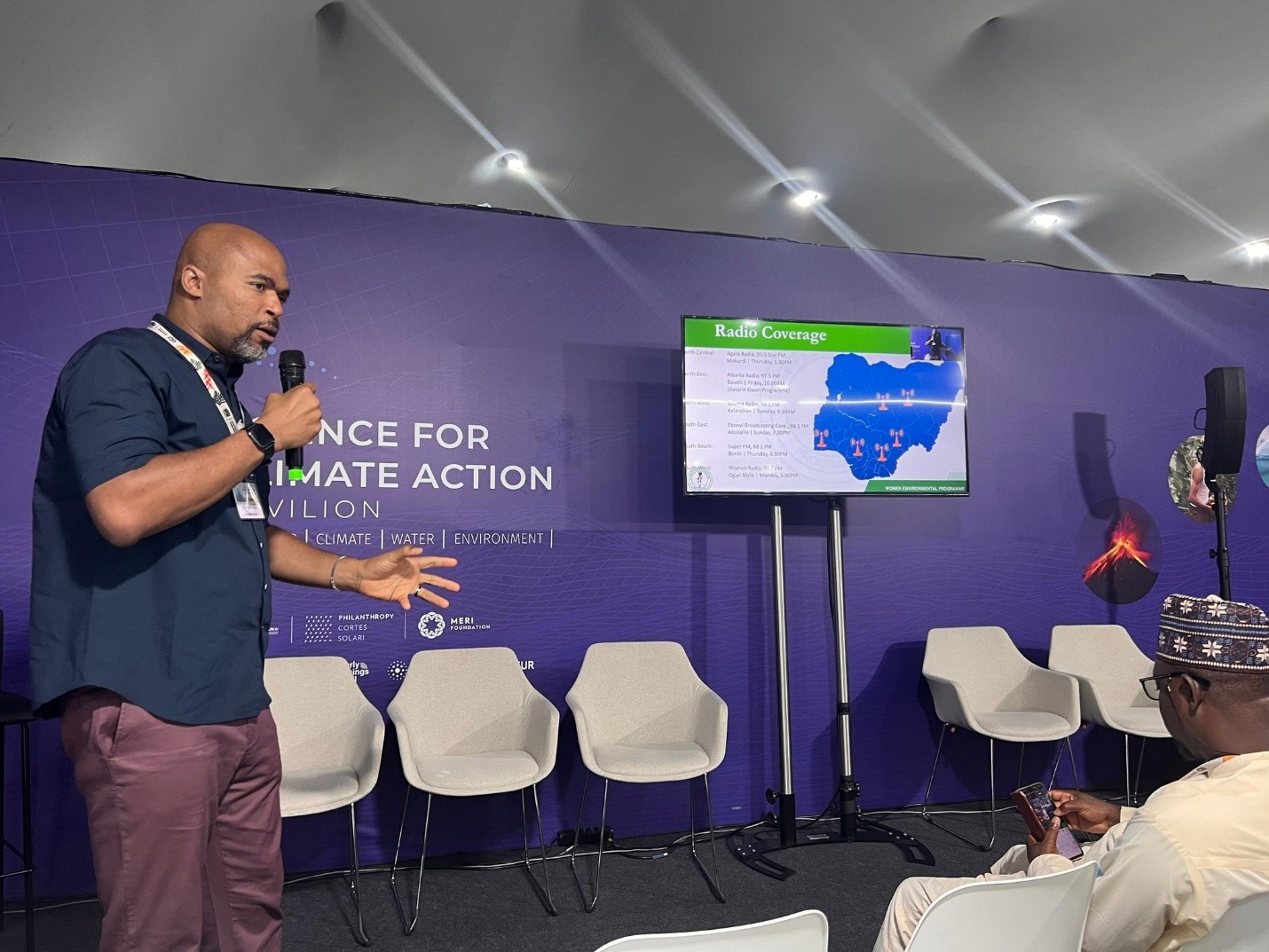
WEP shared how her Farm Beta Radio, hosted on 6 radio stations in Nigeria is reaching over 6 million farmers with early warning climate information, averting climate risks on agriculture, and promoting agroecology.
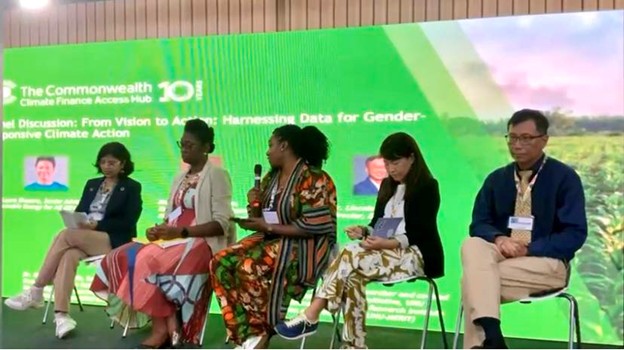
Our Executive Director for Nigeria, Anne-Marie Abaagu Igboba, spoke about the importance of gender disaggregated data in formulating climate change policies and programmes. She was one of the panelists during the side event organized by The Common Wealth at the Nigeria Pavilion at #COP30, on the 17th November 2025 titled, “Advancing gender-responsive climate action: Nigeria’s framework for a national data hub on gender and climate information.
On the streets of #COP30, our Co-Executive Director, John De Baaki, spoke with Health of Mother Earth Foundation‘s TV, on the need for #COP30 to take a decision that protects smallholder farmers – HOMEF TV Words on The Streets of COP30 on Agriculture, Food Systems and Family Farming – YouTube
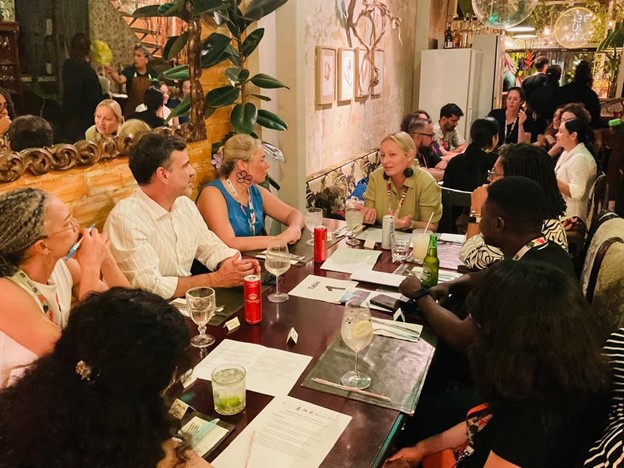
Our Co-Executive Director, John Baaki also participated at the dinner discussion on leveraging the ICJ climate ruling to unlock ambition and enhance accountability. Ahead of COP30, in response to a request from the UN General Assembly, the International Court of Justice (ICJ) issued an Advisory Opinion on the obligations of States in respect of climate change. Participants at the dinner discussion examined the ICJ ruling to see if it was going to shape negotiations at COP30. Read the opinion piece written by our Co-Executive Director about the ICJ ruling here>>
Some of the COP30 outcomes
The following are some of the key decisions that were reached:
- Fund for responding to Loss and Damage (FRLD): FRLD launched the call for funding requests for its start-up phase. Funding requests are to be submitted between 15 December 2025 and 15 June 2026 – https://www.frld.org/nodebim
- Adaptation Fund: Parties agreed to triple Adaptation Fund by 2035.
- Global Goal on Adaptation: Parties adopted Belem Adaptation Indicators. The indicators are intended to inform national approaches to tracking adaptation action and progress.
- Gender Action Plan: Parties adopted the Belem Gender Action Plan for 2026-2034. The Action Plan has 5 priority areas: (a) Capacity-building, knowledge management and communication (b) Gender balance, participation and women’s leadership (c) Coherence (d) Gender-responsive implementation and means of implementation (e) Monitoring and reporting.
- New initiatives: Parties created new initiatives to raise climate ambition: The “Belém Mission to 1.5” aims to encourage higher ambition in national climate plans (NDCs) by fostering dialogue on the necessary international cooperation and investment. The “Global Implementation Accelerator,” is a voluntary and cooperative platform intended to assist countries in moving from planning to action.