From Displacement to Resilience: How a Climate-Smart Agriculture Farm Is Restoring Hope for Female IDPs in Jibia, Katsina State
Living Between Displacement and the Hope of Returning Home
For many women displaced by banditry in Jibia Local Government Area (LGA) of Katsina State, the consequences of conflict extend far beyond losing their homes. The loss of husbands, children, livelihoods, and family support systems has left many struggling to meet their most basic needs, including food, shelter, and healthcare. For women who have lost their primary breadwinners, the challenge of caring for their children and other dependants has become even more difficult.
Following continued dialogue between community representatives and bandit groups, relative peace has been sustained in parts of Jibia LGA, with noticeable improvements in security conditions in several communities. These developments have encouraged some internally displaced persons (IDPs), particularly men from relatively peaceful areas, to gradually return to their communities.
However, the security situation remains fragile. Communities and wards that previously served as major bandit camps, including Mallamawa, Gangara, Shepada, and parts of Bugaji, remain largely deserted and continue to pose significant security risks. Consequently, many displaced women have remained in IDP camps, awaiting the restoration of more comprehensive and sustainable peace before considering a safe return home.
For these women, displacement has created a prolonged struggle for survival. With limited livelihood opportunities and inadequate support networks, some have resorted to begging or undertaking poorly paid casual labour on other people’s farms to feed themselves and their families. Even these options are often inaccessible to older women, women with caregiving responsibilities, and those whose physical condition limits their ability to undertake strenuous work.
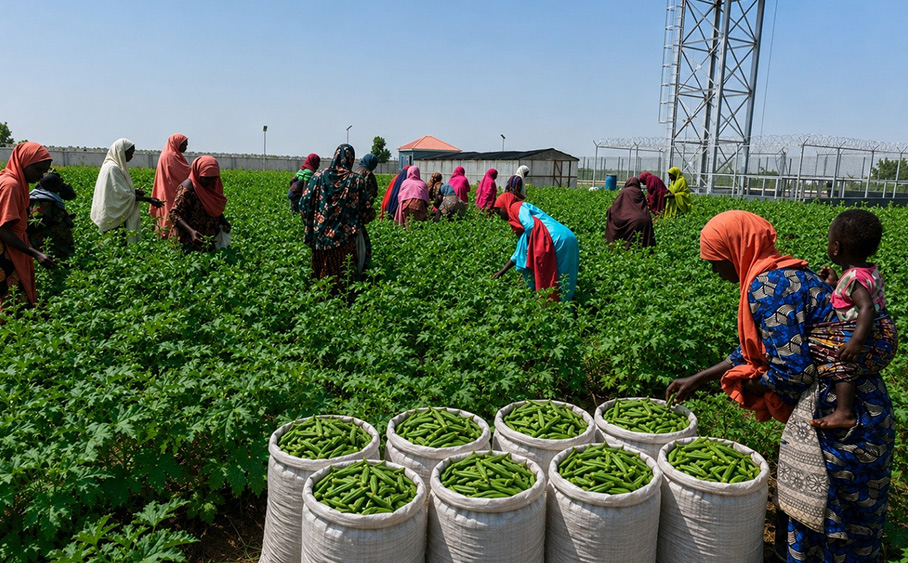
It is against this backdrop that the Climate-Smart Agriculture Demonstration Farm, established by the United Nations Development Programme (UNDP) under the Northwest Climate-Peace Hubs project, has emerged as an important source of livelihood support, food production, and renewed hope for vulnerable displaced women in Jibia.
Implemented through the project’s climate-security approach to conflict prevention, the demonstration farm provides an opportunity for displaced beneficiaries to participate in agricultural production, acquire practical farming skills, access nutritious food, and generate income while awaiting conditions that will allow them to return safely and sustainably to their communities.
A Farm That Is Changing Lives Beyond Agricultural Production
Currently, 50 IDPs constitute the beneficiaries supported through the demonstration farm. For these women, the initiative represents much more than an agricultural intervention. It offers a practical means of addressing immediate food needs while building the skills and confidence required to pursue more sustainable livelihoods.
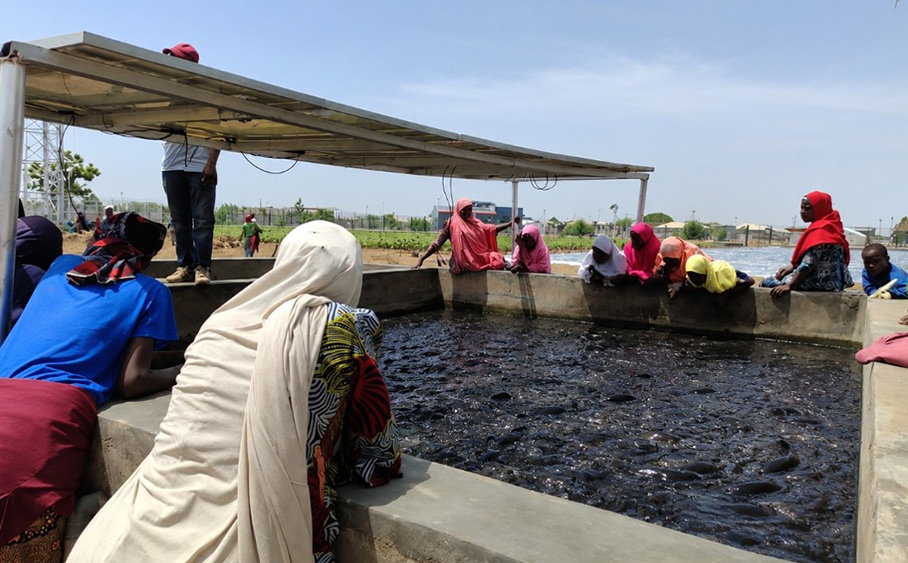
Through participation in the farm, beneficiaries have accessed agricultural production opportunities and gained experience in cultivating crops and participating in aquaponic fish production. The initiative has also provided them with access to vegetables and fish for household consumption, helping them reduce their dependence on purchased food.
The results have been encouraging.
During the farming period, the beneficiaries harvested approximately 58 sacks of okra. Of these, 48 sacks were sold at ₦70,000 per sack and 10 sacks at ₦60,000 per sack, generating approximately ₦3.96 million in revenue. Okra harvesting and sales were still ongoing, indicating the potential for further earnings. The beneficiaries also harvested watermelon, with the first batch generating approximately ₦789,000 in sales.
In addition to crop production, the aquaponic component of the demonstration farm provided another source of income. A total of 473 table-size catfish were harvested and sold at prices ranging from ₦1,550 to ₦2,050 per fish, depending on weight, generating ₦756,800 in sales.
Combined, the reported sales from okra, watermelon, and catfish amounted to approximately ₦5.51 million during the reported harvest period.
Beyond these financial returns, the farm has helped beneficiaries access food directly from agricultural production. For women who previously struggled to afford even basic meals, the ability to harvest vegetables and fish for household consumption has made a meaningful difference in their daily lives.
The impact is perhaps best understood through the personal experiences of the women whose lives have been affected by displacement and who are now benefiting from the initiative.