EQUIPPING STAFF WITH AGRO-ECOLOGY SKILLS TO ADVANCE SUSTAINABLE DEVELOPMENT
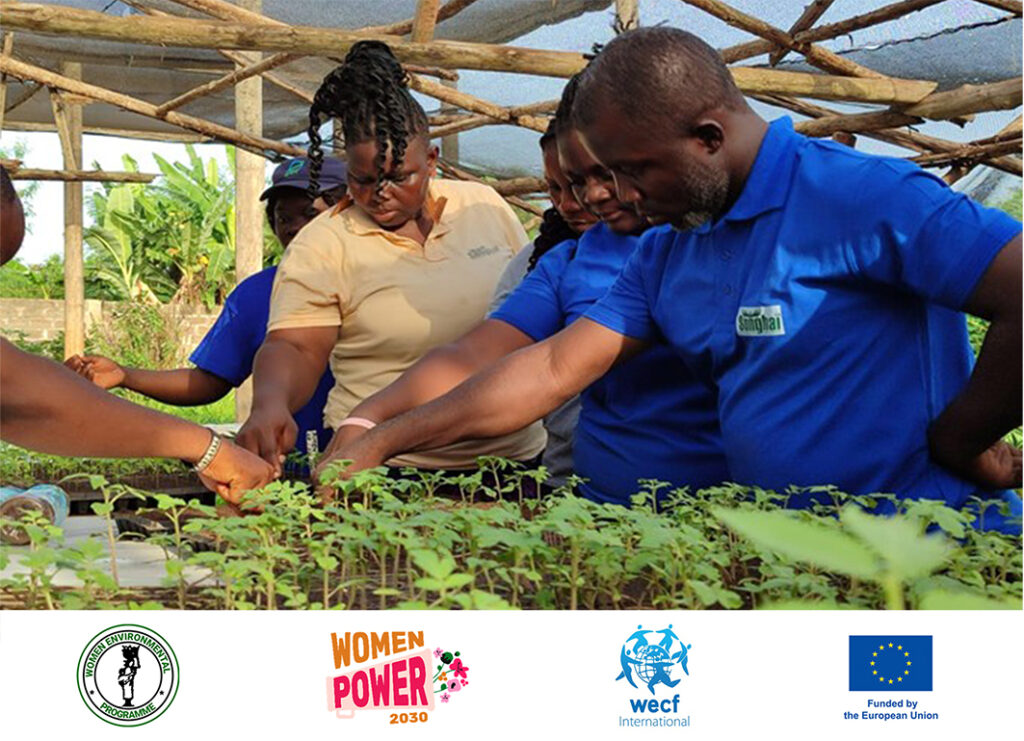
In early May 2025, five staff members from the Women Environmental Programme (WEP), drawn from WEP country offices in Nigeria, Sierra Leone and Togo, traveled to Cotonou, Benin Republic, to participate in a twelve-day agroecology training at Songhai Farm. Organized under the Women Power 2030 Project, the training aimed to build practical skills in sustainable agriculture, renewable energy, and food security.
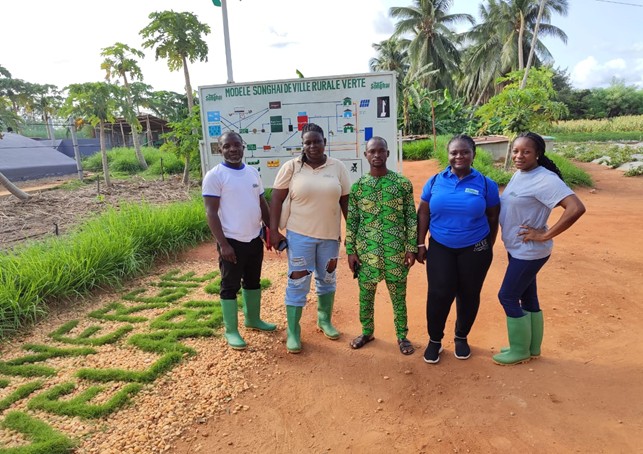
Our team arrived Songhai Farm on the 4th of May 2025. After receiving personal protective equipment and training kits and assigned with interpreters, a guided tour introduced them to the farm’s integrated systems, setting the stage for the hands-on learning that would follow.
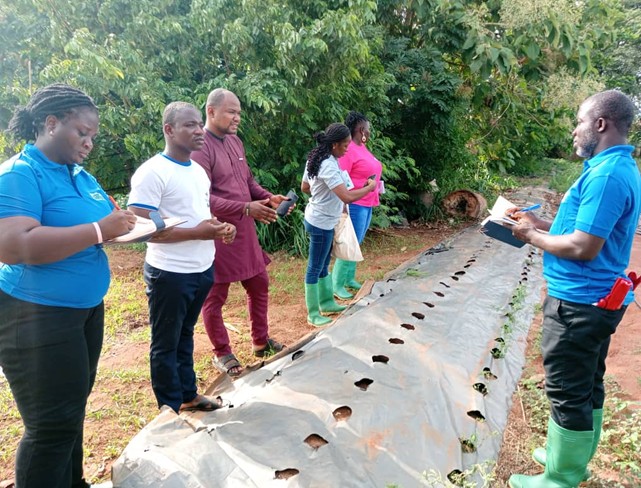
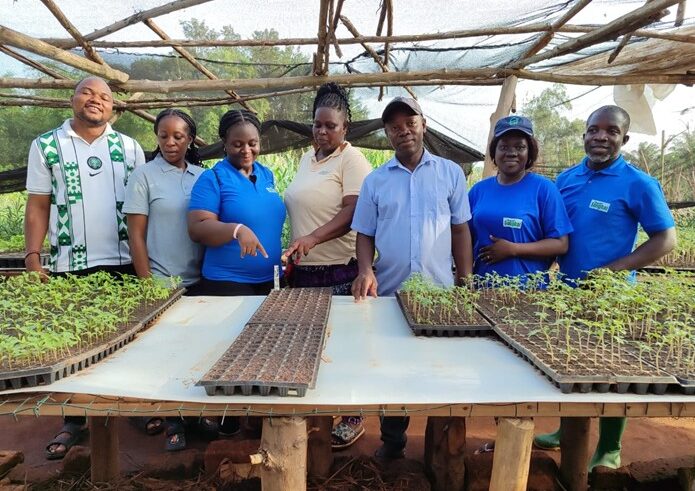
The first sessions focused on composting and soil fertility management. Staff learnt how to transform plant residues, food waste, and animal manure into nutrient-rich compost. They practiced layering, turning, and watering techniques, observing firsthand how these methods support consistent crop yields at Songhai Farm.
Next, participants delved into nursery management. They prepared beds for crops including tomatoes, lettuce, cabbage, peppers, ginger, and sweet corn. The training covered land clearing, compost application, planting drills, watering schedules, and pest prevention. Staff observed germination and early plant care techniques, emphasizing cleanliness and plant health.
Seed multiplication and preservation followed, where participants learnt how to ensure a reliable supply of high-quality seeds. They learnt to test seeds for yield potential, disease and drought resistance, and suitability for local conditions.
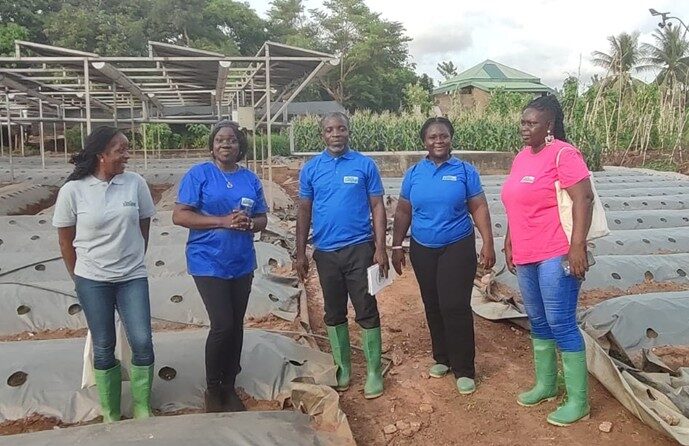
The training then moved to crop production and agrivoltaics. Staff participated in soil preparation, planting, spacing, irrigation, mulching, and harvesting exercises. They explored agrivoltaics, combining solar energy with crop cultivation to optimize land use and income.
Participants also learnt about effective microorganisms (EM), including EMAS, EM5, and fermented plant extracts. They saw how these solutions enhance soil health, support plant growth, and naturally prevent pests, reinforcing sustainable agriculture practices.
Renewable energy and biogas sessions introduced staff to the GGC 2047 fixed-dome biogas plant. They observed the preparation of animal waste for digestion and learnt how the resulting biogas can be used for cooking, heating, and electricity generation.
The training programme also included practical agro-industry and cottage processing. Staff learnt how to produce yoghurt, bread, tamarind syrup, and pineapple jam, following step-by-step instructions on ingredient preparation, hygiene, cooking or baking, and storage. These sessions highlighted the importance of small-scale value addition in sustainable agriculture.
The training concluded with a certification ceremony recognizing the participation of WEP staff: Mr. Ukange Chivir, Miss Jennifer Oko, and Mrs. Ikyaan Jessica from Nigeria; Brigitte Ackakpo-Addra Bridget from Togo; and Stalina Voegli from Sierra Leone.
By the end of the training, WEP staff had gained practical skills in composting, nursery management, seed multiplication, crop production, effective microorganisms, renewable energy, and agro-processing. The experience strengthens WEP’s capacity to implement community-based sustainable agriculture and food security initiatives.
This training programme was supported through the consortium project – “WomenPower2030: Feminists Accelerate Action for Sustainable Development,” supported by the European Union. The project is led by Women Engage for a Common Future (WECF), with Women Environmental Programme as one of the consortium members.
The WomenPower2030 has a major outcome of “Increased engagement and influence of women´s and feminist Civil Society Organisations in the design and implementation of gender-just climate action and sustainable development policies, strategies, and programs at the national, regional, and global level.”