Democracy Without Women Is Democracy Diminished: Reflections from the Fifth Ministerial Conference on Feminist Foreign Policy in Madrid
Democracy Without Women Is Democracy Diminished: Reflections from the Fifth Ministerial Conference on Feminist Foreign Policy in Madrid
By: Dr. Priscilla M. Achakpa
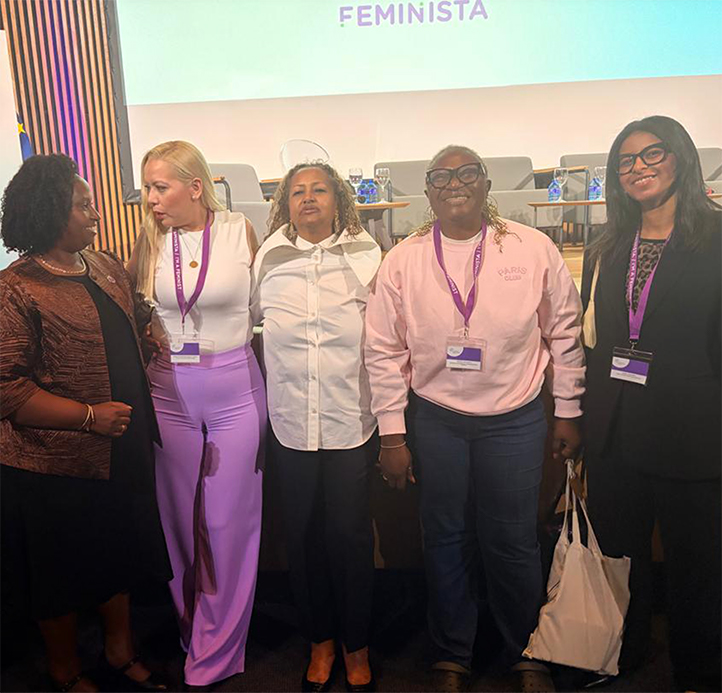
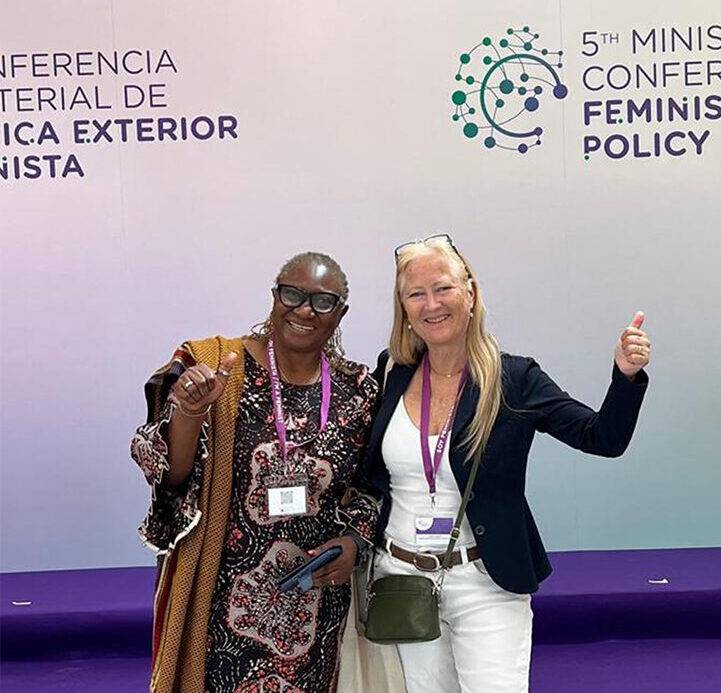
Sitting among ministers, diplomats, United Nations representatives, parliamentarians, academics, and civil society leaders at the Fifth Ministerial Conference on Feminist Foreign Policy (FFF) in Madrid, I am reminded that some conversations transcend borders. The discussions on Peace, Democracy and Equality are not simply global debates—they are deeply relevant to Nigeria and to every nation striving for inclusive and sustainable development.
As someone who has spent decades working to advance women’s rights, environmental justice, climate action, and inclusive governance through the Women Environmental Programme (WEP), I have witnessed both the remarkable resilience of women and the persistent barriers that continue to exclude them from decision-making. The conversations in Madrid reaffirm what many of us have long known: democracy cannot thrive when half of the population remains on the margins of leadership.
Across the world, democratic institutions are facing unprecedented challenges. Civic spaces are shrinking, conflicts are increasing, misinformation is spreading, and hard-won gains on women’s rights are being challenged. Yet the evidence remains clear—societies are more peaceful, institutions are stronger, and development outcomes are more sustainable when women participate fully in governance.
These discussions inevitably bring my thoughts home to Nigeria.
Nigeria proudly celebrates its democratic journey, yet one of its greatest democratic deficits remains the underrepresentation of women in political leadership and decision-making. Nigerian women contribute immensely to national development. We are community leaders, entrepreneurs, professionals, peacebuilders, farmers, environmental defenders, caregivers, and active citizens. We mobilize voters, strengthen communities, and sustain families.
However, when critical decisions are made in political parties, legislative chambers, executive councils, and governance institutions, women are still significantly underrepresented.
This reality is not the result of a lack of competence or ambition. Rather, it reflects deeply entrenched patriarchal norms, structural inequalities, political violence, financial barriers, and institutional cultures that continue to favour male leadership. These systemic obstacles limit women’s opportunities to contest elections, influence policy, and shape national priorities.
Throughout the conference, one message has consistently emerged: when women are excluded, democracy is weakened.
The erosion of women’s rights is often an early indicator of democratic decline. Excluding women from leadership reduces the diversity of perspectives needed for effective governance, weakens public trust in institutions, and undermines efforts to build lasting peace. Research consistently demonstrates that countries with greater women’s representation achieve stronger democratic institutions, more durable peace agreements, improved governance, and more inclusive economic growth.
The challenge before us is therefore not one of capacity. Nigerian women have repeatedly demonstrated exceptional leadership across every sector. The challenge lies in generating the political will to dismantle the barriers that continue to prevent women from participating equally in public life.
As Nigeria prepares for another electoral cycle, we must look beyond elections as periodic exercises in voting. Democracy is fundamentally about representation, accountability, participation, and inclusion. It requires that those making decisions genuinely reflect the diversity and aspirations of the people they serve.
We must therefore ask ourselves difficult but necessary questions. Why do qualified women remain significantly underrepresented in political institutions? Why do political parties continue to overlook capable female candidates? Why do informal power structures continue to concentrate leadership opportunities within predominantly male networks? Most importantly, what kind of democracy are we building if half of our population remains largely excluded from positions of influence?
The discussions in Madrid also reinforce the importance of Feminist Foreign Policy. Contrary to common misconceptions, Feminist Foreign Policy is not about privileging women over men. It is about advancing policies that promote inclusion, equity, accountability, peace, and human security. It recognizes that sustainable solutions to today’s complex challenges—including climate change, conflict, economic inequality, environmental degradation, and democratic governance—require the equal participation of women and other historically marginalized groups.
This perspective resonates strongly with my own work. Whether supporting women affected by climate change, advocating for gender-responsive environmental policies, strengthening community resilience, or promoting inclusive governance, I have consistently seen that sustainable development is achieved when women are recognized not merely as beneficiaries, but as leaders, innovators, negotiators, and decision-makers.
The future of Nigeria’s democracy depends on our willingness to embrace this reality.
We stand at an important crossroads. We can continue to accept a political culture where women’s exclusion is normalized, or we can intentionally build institutions that reflect the talents, aspirations, and leadership of all Nigerians.
My experience in Madrid has strengthened my conviction that the struggle for gender equality is far more than a women’s issue. It is fundamentally a democratic issue, a governance issue, a development issue, and a human rights imperative.
If democracy truly means government of the people, by the people, and for the people, then women must be fully represented among those people—not symbolically, but meaningfully and equally.
Nigeria’s democratic promise will remain incomplete until women enjoy equal opportunities to lead, influence decisions, and shape our collective future.
The time to move beyond rhetoric is now. The time to invest in women’s leadership is now. The time to build a truly inclusive democracy is now.