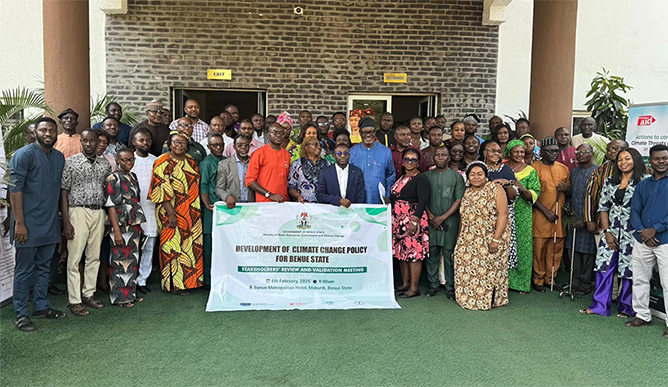
Benue Stakeholders Review Draft Climate Change Policy
Stakeholders in Benue State have called for a comprehensive and practical Climate Change Policy that will strengthen the state’s capacity to respond to climate risks, protect natural resources and promote sustainable practices across sectors.
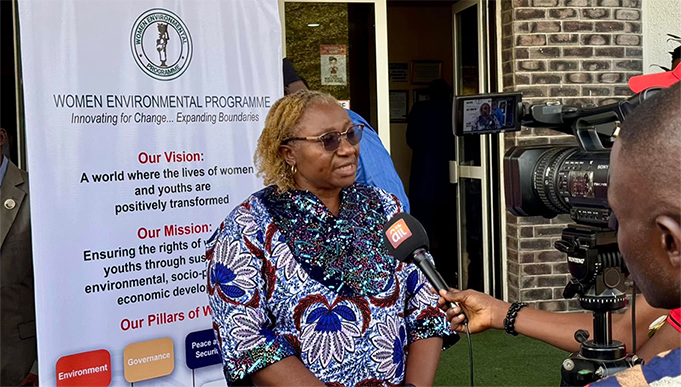
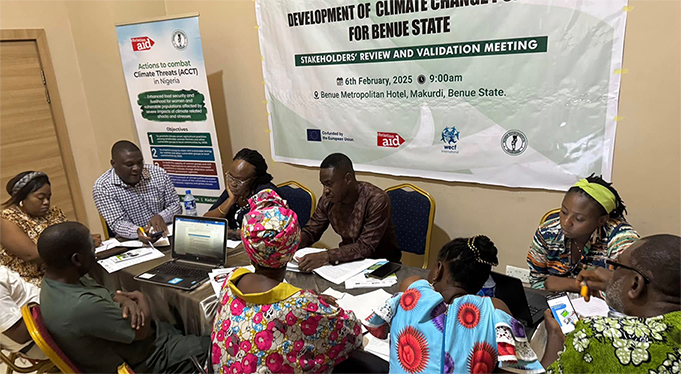
The call was made during a stakeholders’ review and validation meeting on the draft Benue State Climate Change Policy, organised by the Benue State Government in collaboration with the Women Environmental Programme (WEP) in Makurdi, the state capital.
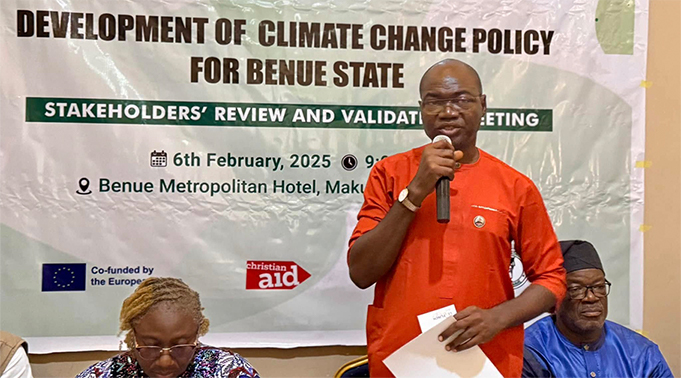
Speaking at the meeting, the Commissioner for Water Resources, Environment and Climate Change, Odoh Ugwu, emphasised the need for coordinated action to address the growing effects of climate change on communities, livelihoods and the environment.
He noted that climate change is already affecting the state through increased flooding, heatwaves, unpredictable rainfall and biodiversity loss. These challenges, he said, have serious implications for agriculture, food security, livelihoods and community stability.
“The issue of climate change is no longer a distant threat; it is a present and pressing reality,” Ugwu said, urging stakeholders to contribute meaningfully to the policy review process to ensure that the final document reflects the state’s needs and priorities.
The Commissioner highlighted environmental protection and sustainable water resource management as key areas requiring attention. He called for stronger efforts to address pollution, deforestation and habitat destruction through community engagement, public education and effective policy enforcement. He also stressed the importance of ensuring access to clean and safe water through sustainable water management practices.
Collaboration for Effective Climate Action
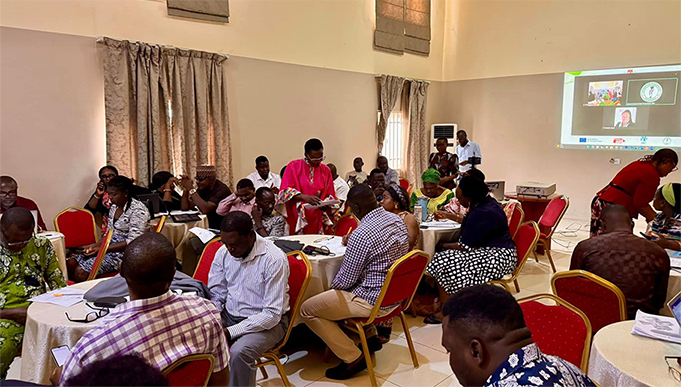
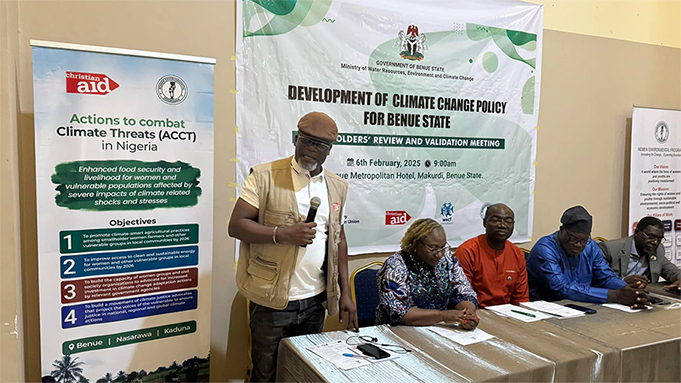
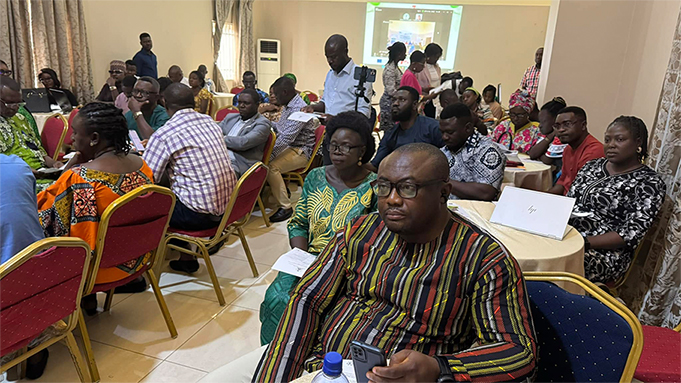
The validation meeting provided an opportunity for government representatives, civil society organisations, development partners and other stakeholders to review the draft policy, share recommendations and identify practical measures for addressing climate change in Benue State.
The Global President and Founder of WEP, Dr Priscilla Achakpa, encouraged participants to make substantive contributions that would strengthen the policy and support its effective implementation. She commended the Benue State Government and other partners for their collaborative efforts towards advancing climate action in the state.
Similarly, Bamidele Emmanuel, representing Christian Aid Nigeria, called on stakeholders to ensure that their contributions translated into actionable commitments capable of delivering meaningful results for communities affected by climate change.
The discussions underscored the importance of a coordinated approach to climate action, with clear priorities, institutional commitment and the participation of relevant stakeholders across sectors.
From Policy Development to Implementation
For Benue State, developing a comprehensive Climate Change Policy is an important step towards establishing a coordinated framework for climate adaptation, environmental protection and sustainable development. However, its effectiveness will depend on how well the policy reflects local realities and is translated into practical actions.
The policy review and validation process therefore offers an opportunity to strengthen the state’s response to climate risks, promote sustainable management of natural resources and improve the resilience of communities whose livelihoods depend on climate-sensitive sectors, particularly agriculture.
Through its collaboration with the Benue State Government and other partners, WEP continues to support efforts that promote environmental sustainability, inclusive climate governance and community resilience.
The successful validation and subsequent implementation of the policy will be important in helping Benue State respond more effectively to the impacts of climate change and advance a more sustainable future for its people.