WEP Participates in Roundtable on Justice and Nigeria’s Energy Future
Abuja, Nigeria | September 1, 2026
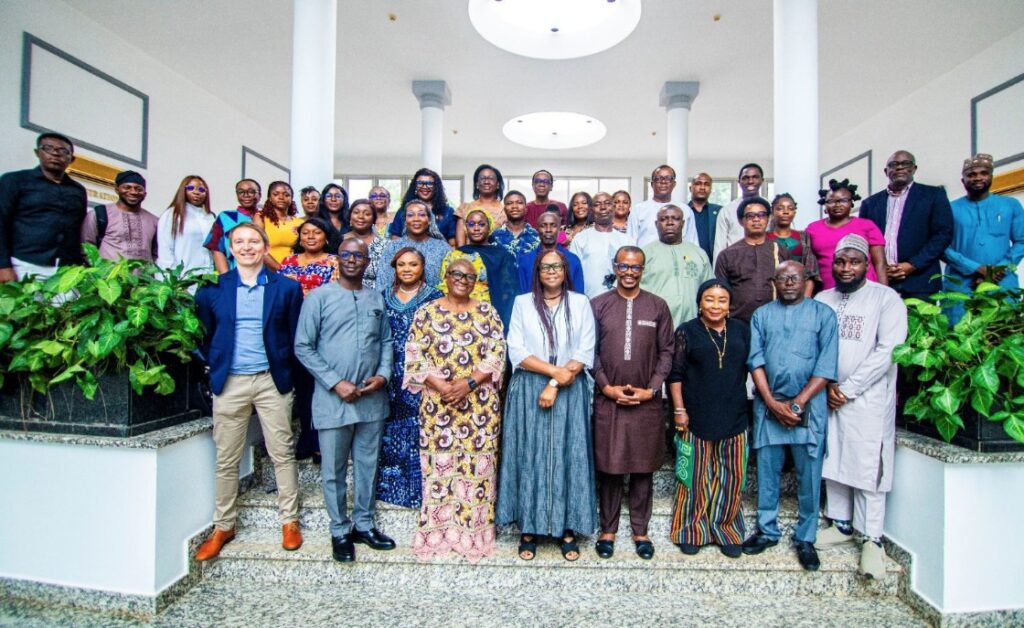
Women Environmental Programme (WEP) participated in the Justice and Energy Transition Roundtable held on September 1, 2026, at the Shehu Musa Yar’Adua Foundation Center in Abuja. The roundtable brought together journalists, government representatives, civil society organisations, researchers, and other stakeholders to examine Nigeria’s energy transition through the lens of justice and accountability.
WEP was represented by its Founder and Global Lead, Dr. Priscilla Achakpa, who contributed to discussions on the social and gender dimensions of Nigeria’s changing energy landscape.
The roundtable focused on helping journalists and other stakeholders look beyond energy production figures and emissions to examine how energy policies and investments affect people and communities. Discussions centred on key questions including who benefits from energy investments, who bears the costs, whose voices influence decisions, and what mechanisms exist to address harm.
Understanding Energy Justice in Nigeria
The discussions highlighted that Nigeria is experiencing several interconnected changes across its power sector, household energy use, public finances, industrial development, and resource-producing communities.
While much attention is given to electricity generation and infrastructure, participants noted that changes at household and community levels often have the most direct impact on people’s lives. With more than 80 million Nigerians lacking access to electricity and 87 percent lacking clean cooking solutions, reliable and affordable energy remains a major development concern.
The roundtable identified recognition, representation, redistribution, and reparation as important principles for advancing energy justice. These principles call for affected communities to be recognised, represented in decision-making, included in the distribution of benefits, and provided with appropriate remedies where harm occurs.
Women and Vulnerable Groups Must Be Included
Gender was an important part of the discussion, particularly the hidden costs of energy poverty.
Women often experience greater time poverty, health risks, safety concerns, and lost economic opportunities as a result of inadequate energy access. Participants stressed that women should have a role beyond being beneficiaries of energy programmes. They should also be involved as designers, owners, decision-makers, and leaders.
The discussion further considered the experiences of rural communities, low-income households, persons with disabilities, informal workers, and communities affected by oil production and mining. Participants emphasised the need to recognise how these different vulnerabilities can overlap and increase the risks faced by particular groups.
Government and Policy Perspectives
The roundtable also featured contributions from the National Council on Climate Change, with its Director-General, Dr. Tenioye Majekodunmi, highlighting the need to consider what Nigeria is transitioning from, what it is transitioning to, and who the transition is intended to serve.
She noted that Nigeria’s approach should be development-focused and people-centred, with attention to energy access, employment, industrial development, skills, decent green jobs, gender responsiveness, and community participation.
The discussion also emphasised that Nigeria’s immediate challenge remains the provision of reliable and affordable energy. Participants pointed to the importance of a diversified approach covering clean cooking, transportation, industrial decarbonisation, and energy efficiency rather than relying on a single pathway.
Financing was another major issue, with participants highlighting the need to mobilise private investment, blended finance, development finance, technology transfer, infrastructure, and institutional capacity.
Lessons from the Niger Delta
A case study presented by Olumide Onitekun of the Africa Policy Research Institute examined the application of just-transition principles in the Niger Delta.
The discussion highlighted issues including employment, land rights, environmental health, clean energy access, and the participation of women and young people. It also raised concerns about the distribution of benefits from community development initiatives and the need for stronger monitoring of environmental remediation.
The case study reinforced the importance of measuring outcomes through improvements in livelihoods and community wellbeing rather than relying only on the number of consultations or participants in a programme.
The Role of the Media
A central focus of the roundtable was the role of journalists in strengthening public accountability.
Dr. Marcel Mbamalu of Prime Africa Business encouraged journalists to examine energy and climate claims against evidence, reliable sources, and real-world outcomes. This includes scrutinising climate finance, contracts, investment commitments, employment claims, environmental impacts, and the experiences of affected communities.
Participants encouraged the media to keep ordinary Nigerians at the centre of reporting and to connect policy developments with what people experience in their homes, workplaces, communities, and local economies.
The discussions also called for stronger local and investigative journalism, greater use of indigenous knowledge and local solutions, improved access to data, and sustained engagement between communities, government, civil society, and the private sector.
Towards a Fairer Energy Future
The roundtable identified several priorities for a fairer energy future, including universal energy access, affordability and reliability, women’s leadership, inclusive community decision-making, fair land and benefit-sharing arrangements, decent work, local value creation, access to remedies, and transparency.
Participants also stressed the importance of measuring progress through indicators such as energy reliability, affordability, job quality, participation, grievance resolution, and health outcomes, with data disaggregated by sex, age, disability, income, and location.
For WEP, the discussions reinforced the importance of ensuring that women and communities are meaningfully included in decisions that shape Nigeria’s energy and climate future.
The roundtable concluded with a shared call for a more inclusive and accountable approach, where energy policies and investments are assessed not only by infrastructure delivered or emissions reduced, but also by their impact on people’s lives and livelihoods.
A fair energy future must work for the people and communities at its centre.